


The tsundere vs. kuudere giveaway
“The machine gave me two.” Sure it did. The cans are different flavors, the second one happens to be your favorite, and you just watched your friend put more money in. There's a very good case for letting this one go. Your hands are cold, the cocoa's hot, and somebody went to the trouble of remembering.
That flimsy alibi is the fun of a tsundere scene. For one glorious second, you know exactly how somebody feels and exactly how much they'd like you to know something else. Cast a kuudere as the one buying the cocoa and you might get a matter-of-fact “Here, it's still warm.” Halfway down the platform it dawns on you that you mentioned liking that flavor once. Last winter.
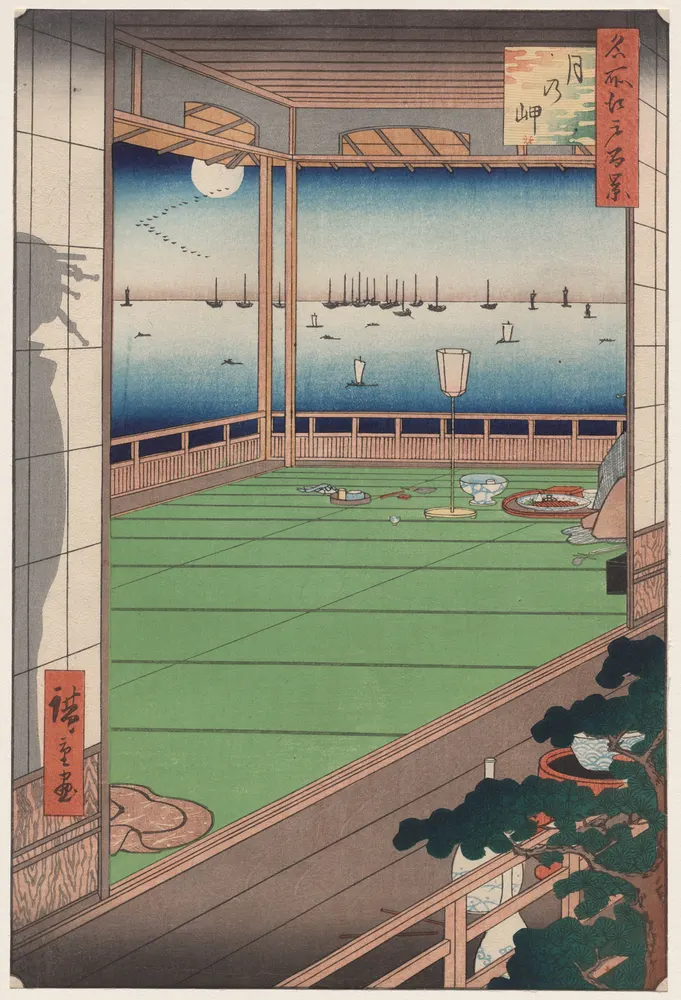
In Hiroshige's rain print everybody has a pressing interest in getting somewhere dry. Imagine sharing an umbrella on that hill. It tilts your way for the whole walk. The wet shoulder at the end is evidence enough that somebody cared. How they react when you offer them a towel is where these twelve scenes get interesting.
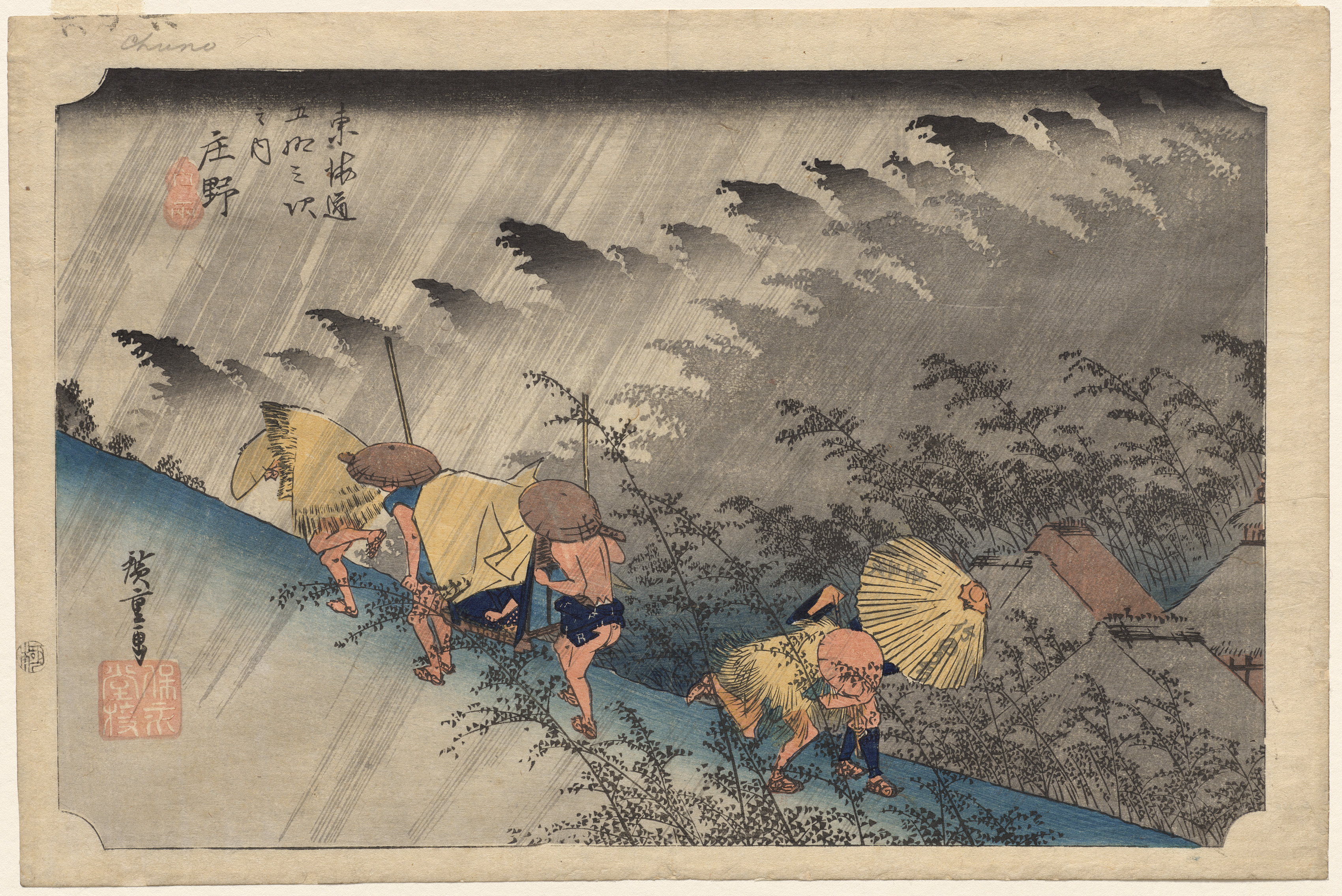
See that yellow umbrella pitching sideways on the hill? For a second you can almost feel the gust that caught it. If this were the rain episode, I'd be watching the traveler just ahead. Do they turn around?
A tsundere test for anyone who reads the subtitles twice
The friend who's watching with you has a theory. Every time the lead gets snippy, she says, that's a crush. Then comes a scene where he's snippy because the copier has jammed, and even she has to concede that the romantic prospects of the copier look poor. A prickly remark by itself tells you very little. Look for the gap between the kindness he just showed and the cover story he's trying to sell.
With kuudere, shift your attention to follow-through. Who remembers that your left wrist hurts and offers you the lighter end of a folding table? People who've known each other a while can have whole conversations in gestures that small. Give yourself a second to notice who benefits from all that composure. The person carrying the other end of the table already has.

Tsundere
Carmine · Guarded warmthThe world’s least convincing errand
- High match
- You take two buses to bring a sick friend their favorite soup. When they open the door, you claim you were in the neighborhood. You're still holding the transfer slip.
- Low match
- “I figured you'd want company” comes out about as easily as “Here's the soup.” Your friend knows why you showed up.
- Ask yourself
- What's the most trouble you've ever gone to for something you called no trouble?

Kuudere
Glacier blue · Composed affectionThe third battery
- High match
- The mic cuts out halfway through your friend's solo. You slide a fresh battery across the stage, tap twice to give them their cue, and keep the same expression you wore through sound check.
- Low match
- From the back row, somebody could tell exactly when the mic died just by watching your face.
- Ask yourself
- Who could pick out your version of a standing ovation from one raised eyebrow?
Tsundere vs. kuudere in six everyday scenes
A great supporting character knows when to let you get away with something. They'll accept the lemon drops, sip from the handmade mug, and admire the stitching on a repaired bag without ever saying the one thing that'd send you under the table. Read down either column for a familiar kind of friend, or across to catch two people coming up with entirely different ways to say “I thought of you.”
| The occasion | The tsundere version | The kuudere version |
|---|---|---|
| A gift for the walk home | He hands over a tin of lemon drops before the night bus comes. “They're too sour for me.” Terrific explanation, except his friend can read the handwritten order slip stuck to the tin. It mentions a birthday. | She lets her friend try one, waits a beat, and closes the tin before the bus lurches. “Pocket on your left zips.” It's a small thing to have noticed about somebody else's coat. |
| A compliment in public | “You remembered my birthday!” She's doing fine until the entire ceramics club turns to look. Suddenly the crucial fact about the tiny hand-thrown mug is that they had extra clay. Quite a coincidence, that handle shaped like his cat. | The same roomful of people can look as long as they like. She tells him she redid the ear because it kept breaking in the kiln. She even lets him thank her all the way to the end of the sentence. |
| A teammate forgets a line | Somebody draws a blank on opening night. Their scene partner improvises a truly outrageous compliment about his own hair to give them a way back in. Backstage he shrugs off the thanks. “Well, it did look good tonight.” | She pours a second cup of prop tea while the silence stretches, then offers the handle to her partner with a small nod. Later, an usher tells them that pause was her favorite bit of the whole show. |
| Nobody's watching | Alone with a torn tote bag, he has an entire evening to think of something normal to say. He lands on “I had the sewing kit out anyway.” Alas, he's also embroidered a tiny shrimp over the hole. The shrimp is hard to explain. | She mends the bag under the good lamp, slips the owner's stray pen back into the lining pocket, and drops it off at breakfast. The first time her friend reaches for the pen, there it is. |
| The missing ticket | The line inches toward the turnstile. “This is exactly why I made copies,” she mutters, digging out a spare. Her friend gets in. Only then does it occur to him to wonder why she made a copy of his ticket in particular. | He's the person you want beside you when a ticket app decides this is the moment for an update. He finds the booking email, turns up the screen brightness, and asks which door leads to their seats. His voice barely changes. |
| Goodbye at the station | He goes through the gate, comes back, and claims he's forgotten which platform he needs. The number is on the sign directly over his head. His friend waits through this last bit of theater. Eventually, he gets to “Text me when you're home.” | She steps close enough to be heard over the station announcement. “I've loved having you here.” Nobody has to chase the train or yell anything through the glass. On the way home, her friend remembers that sentence almost word for word. |
Both high, both low, or dead even?
| Your two scores | What they sound like | Watch for this |
|---|---|---|
| Both high | The calmest person in the kitchen ties back your apron string and rescues the sauce before it scorches. Then you call them a lifesaver. Suddenly you get a ten-minute speech about the price of good butter. | Notice the instant they find out you've seen the favor. Someone can have nerves of steel at the stove and still get a little evasive when you look straight at them. |
| Both low | Picture somebody meeting you at arrivals with a crooked banner and an all-caps declaration of how much they've missed you. A dozen strangers now know it too. You could pick them out from the baggage carousel with the sound off. | Where does the feeling go when the character has very little interest in covering it up? Your scene might come alive in a laugh, a hug, or a completely unplanned leap over somebody's rolling suitcase. |
| Equal percentages | An exact tie skips the winner label on both bars while keeping the actual numbers. Two scores near the outer edge describe a very different set of habits from a pair huddled near the middle. | If you've been playing one character, remember the last thing they did that surprised you. Did the cool head give way when there was an audience? Did they accept praise once everybody went home? |
A closer look at the 95% tsundere card
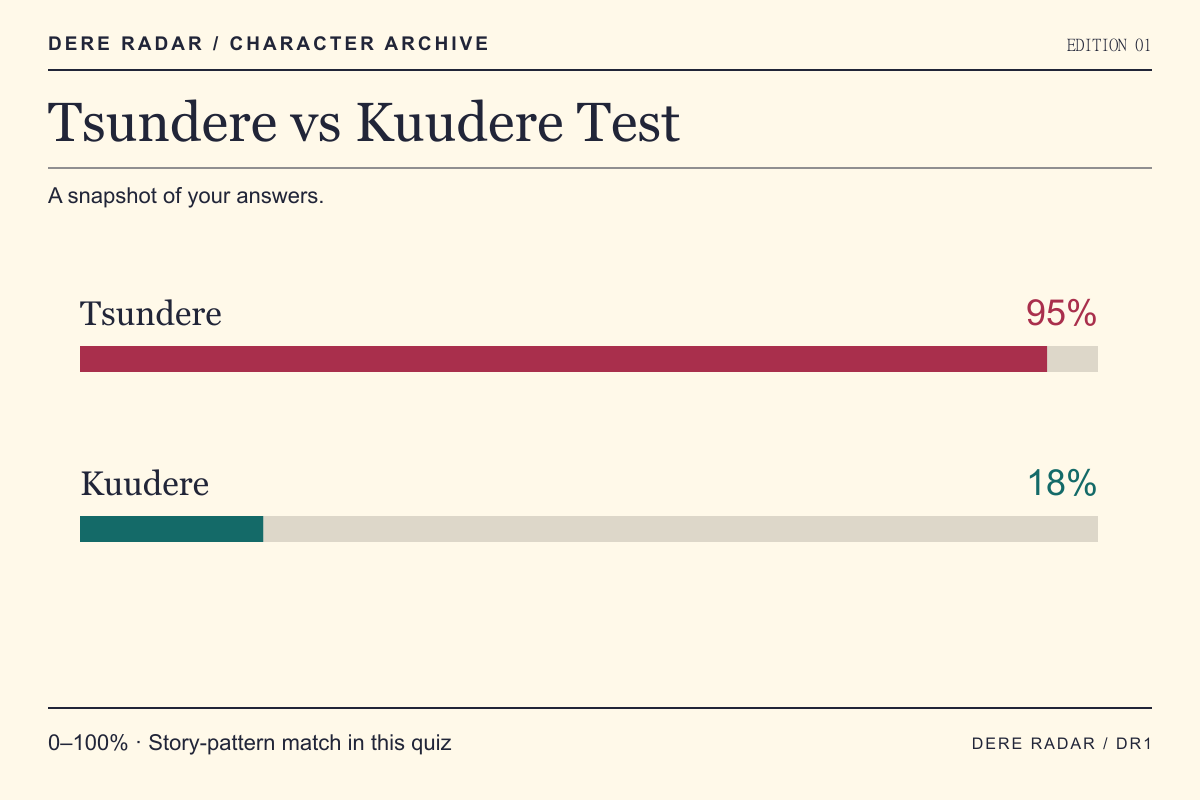
Our sample lands at 95% Tsundere and 18% Kuudere. You can practically see the owner of that mended tote turning it over in her hands. The stitches are so neat. There's a shrimp! Meanwhile our hero has developed an urgent interest in something happening halfway across the street. That's one performance you could get from this set of answers. Open the card to see just how far apart the two scores landed.
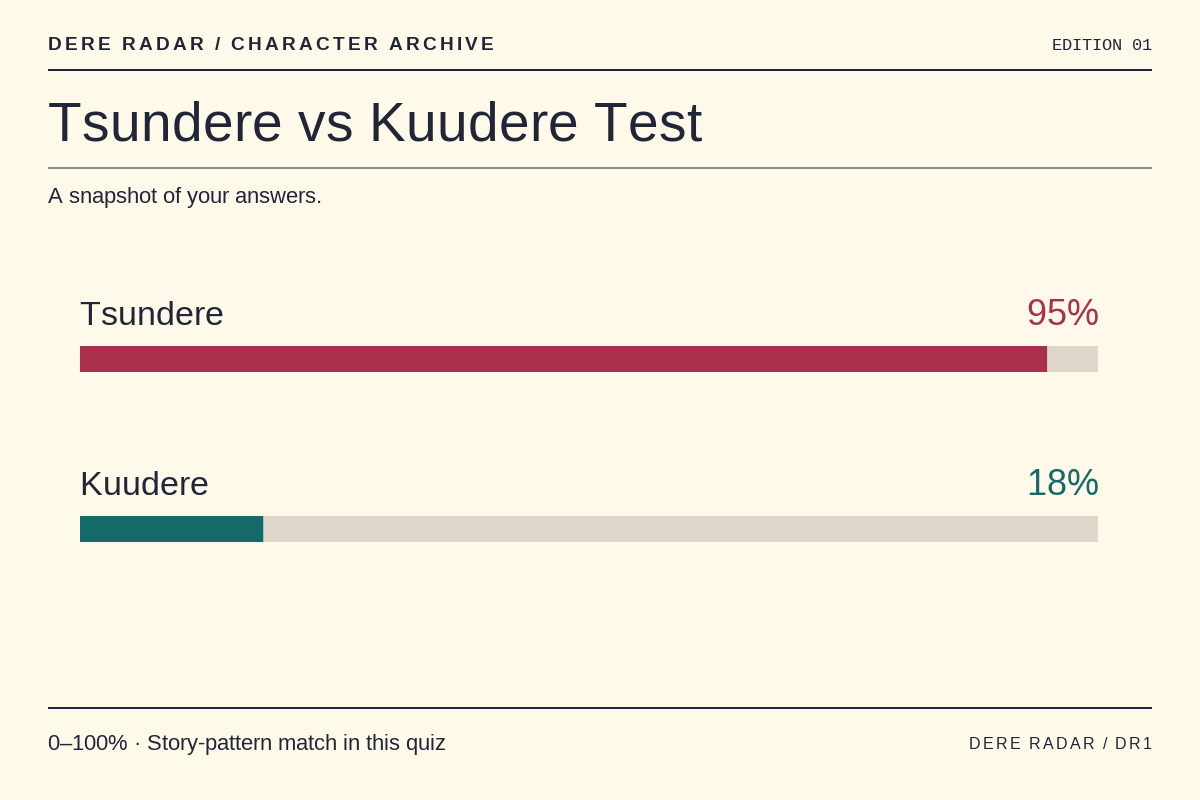
Here's a quieter moment straight from the quiz. “When someone asks whether I missed our coffee breaks, I give a calm, plain yes.” Listen to that yes. It takes the question at face value, which pulls away from deflection. The even delivery fits Kuudere. Strong agreement with this particular scene pushes the two readings in opposite directions. Other scenes give each habit space of its own. The tote question, for instance, asks about playing down the time you spent sewing.
The friend on the receiving end gets a say, too. Maybe she's known the person with the sewing kit since grade school and recognizes “I had it out anyway” as a declaration worthy of a full string section. A new roommate might take the words at face value and hand over three more bags to fix. Suddenly the same gesture has consequences. I'd watch the episode where our hero has to explain the shrimp.
Questions about the tsundere test
What's the difference between tsundere and kuudere when both bring you lunch?
Ask who remembered you hate soggy bread. The tsundere might launch into an oddly passionate defense of packing the tomato separately, because admitting they remembered your lunch preferences feels awfully personal. The kuudere can look you right in the eye and say, “You said it gets soggy.” Same sandwich. Very different conversation over the first bite.
I'm quiet around a crush. Does that put me on the kuudere side?
What's going on during the quiet? You might be perfectly comfortable saying something tender in an even voice. You might also be trying to remember the English word for “hello” because somebody gorgeous took the stool next to yours. Those scenes feel very different from the inside. Look for what happens once you're comfortable enough to speak.
Can I get high scores for both on this tsundere test?
Sure. Maybe you do beautiful work under pressure, right up until the person you did it for calls you sweet in front of the entire pit orchestra. Now your ears are hot. Answer each scene as it comes. You can be remarkably composed through a practical emergency and have surprisingly few defenses against a sincere compliment.
Why don't the two scores split an even hundred?
Each axis has its own set of weighted contributions and its own possible range. One question covers how you talk about helping a teammate. Another is interested in the excitement on your face. A few scenes pick up both habits. The two percentages tell you how strongly each came through in the answers you gave.
Who gets top billing if the percentages match?
An exact displayed tie leaves this two-style card without a named lead or runner-up. You'll still see the numbers. The sample runs in the scoring guide include one where a mix of different answers lands both styles at 52%. Try finding one moment in the story where each reading feels right before giving the character a nickname.
What should I try if I would just say “I made this for you”?
Give the twelve-type dere test a spin. There are plenty of characters whose idea of flirting is to announce it quite clearly, then go get ice cream with the lucky recipient. A broader cast also gives you a place to look if you warm up slowly, love a bit of ceremony, or laugh your way through a magnificent first-date disaster.
Meet the rest of the cast in the twelve-type dere field guide. You can trace one answer through the scoring or check what a friend sees when you share your card.