
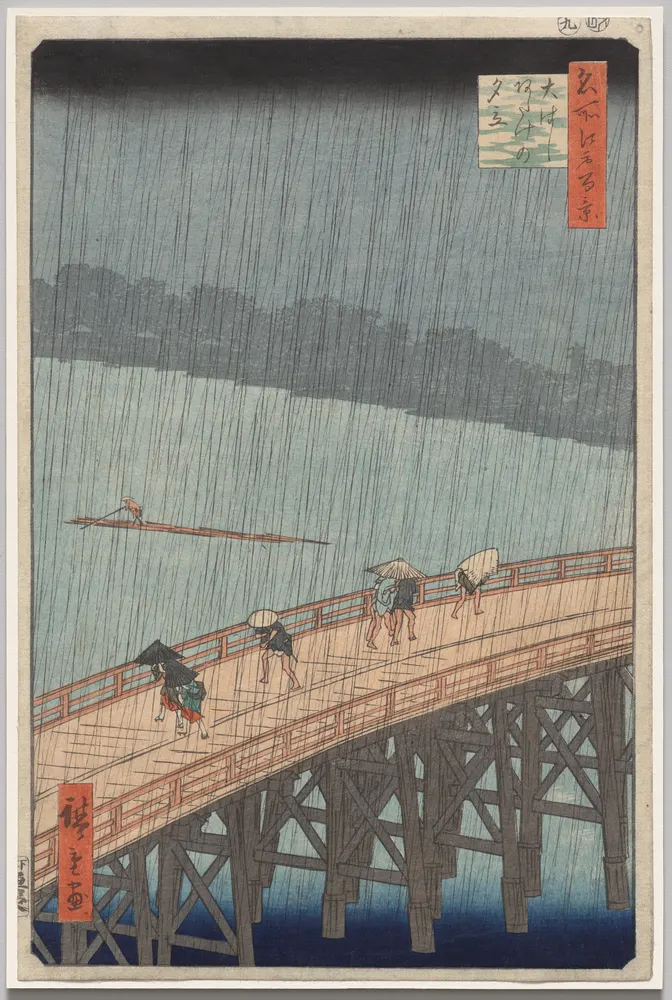



Why a yandere scene can turn on one little word
The whole group chat gets “Made it!” You get a second message that just says “Hey.” For forty minutes your friend's been hunting for a working outlet on the train. You've been wondering whether that last goodbye felt weird to them, too. Same train ride, two completely different episodes.
Anime loves a character who can find a season's worth of feeling in a pause like that. At its darkest, the yandere trope turns devotion into possessiveness and control. Part of the suspense is watching somebody make that leap. Everyday affection has plenty of dramatic material several stops earlier. You can want an invitation very badly and still leave the person you love completely free to turn it down.
For these twelve scenes, cast one person opposite you. A childhood friend who knows every embarrassing haircut will give “see you later” a different sound than the crush who's saying it for the first time. Answer for yourself or play one side of that friendship from beginning to end.
Take a look at the open room in the moon-viewing print. Who had that spot by the water a minute ago? You might imagine someone arranging a cushion exactly where a guest likes to sit. I like the possibility that they've been waiting all evening, that the guest has sent word they'll be late, and that the moon has finally gotten their attention.
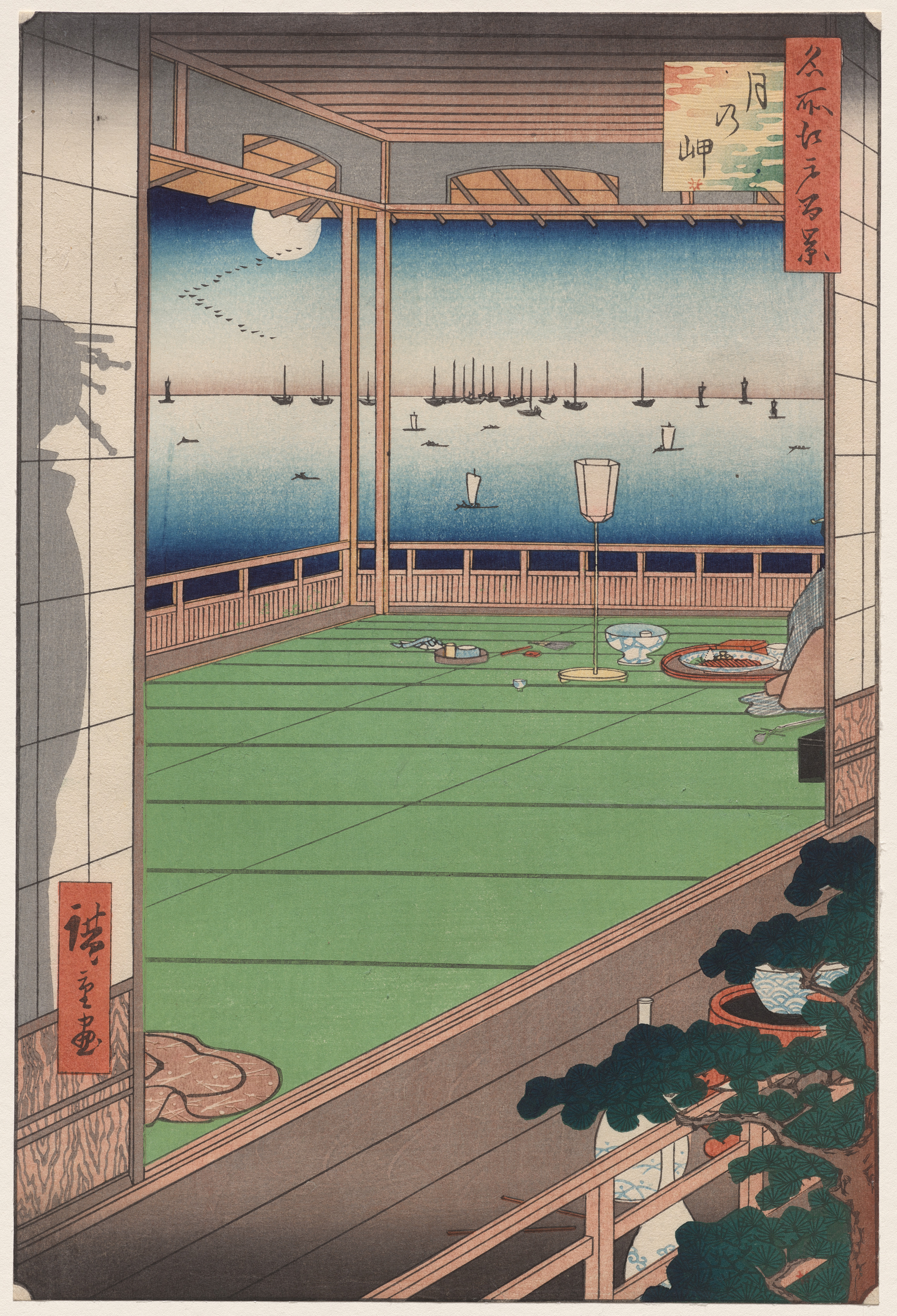
There's a shadow on the screen at the left and a dinner tray at the right. You can practically hear the water in between. After the guest goes home, who'll still be thinking about what they meant to say over dinner?
Four things your yandere radar can pick up
Read the four names on the card and give each one a job in the story. Reassurance gets the line of dialogue that puts a worry to bed. Exclusivity knows why one particular nickname matters. Emotional intensity gets the close-up when a face lights up. Space-giving follows the afternoon after someone asks for time alone. With all four in play, even a two-word message has a little room to breathe.
Reassurance
Interest in signs of continued connectionA heart scribbled on the receipt
- High match
- You're leaving the diner with six people, all trying to agree on a bus. While everybody counts change, your friend squeezes your hand and says, “Same booth next week?” Suddenly the chaos feels manageable. It helps to hear that the night meant something to them, too.
- Low match
- Goodbyes can trail off mid-conversation and you'll pick up the thread next time. A whole afternoon can go by before you even think to check your phone.
- Ask yourself
- What tiny sign would let you get on that bus smiling?
Exclusivity
Value placed on shared rituals for twoThe joke that used to have an audience of one
- High match
- For years you've called each other Captain after a spectacularly bad afternoon in a rowboat. Hearing the whole club use it feels strange. You liked having a little piece of history only the two of you could summon with one word.
- Low match
- Half the pleasure of an inside joke is watching your friend try to explain it to newcomers. By the fourth retelling the boat has somehow gotten smaller.
- Ask yourself
- Which tradition would you ask to keep for two, and how would you feel if your friend wanted to share it?
Emotional intensity
Strength of felt response to connectionOne song eats the whole afternoon
- High match
- The grocery store plays the song you heard together last summer. For everybody else it's background music. You're suddenly on a pier with salt on your lips, holding a melting ice pop. You've walked past the thing you came in here for twice.
- Low match
- A happy memory crosses your mind and you enjoy it on the way to the checkout. There's room left in the day for whatever happens next.
- Ask yourself
- When did a passing detail last change the mood of a perfectly ordinary errand?
Space-giving
Comfort with another person's independent timeSeparate Saturday plans
- High match
- Your favorite person wants a solo museum day. You already know which wildly impractical souvenir they'd love, so you look forward to hearing what they picked. In the meantime there's a whole Saturday with your own name on it.
- Low match
- You honor the afternoon they asked for. Finding something of your own to settle into takes a little effort, especially when you'd pictured going together.
- Ask yourself
- What's the first thing you'd genuinely enjoy doing with the afternoon?
Four ways to write the same longing
Say you know somebody misses their friend. As a description, that'll do. As a scene, it's missing the best part. What's on the kitchen counter? Is their phone in their hand, or did we cut to the friend having a grand old time at camp? Try two of your radar's facets together. These four sketches give you different people to cast in the role. The quiz leaves you free to invent a fifth.
| Who to watch | Facets in the mix | A moment in their life | Try another take |
|---|---|---|---|
| The long-distance DJ | High Emotional intensity and high Space-giving | Her best friend leaves for camp on a Sunday. By Tuesday she's made a playlist so specific it includes the jingle from their usual ice cream truck. She saves it for the trip home. Her friend wanted a week off the phone, and she can already picture their face at track six. | How could you let us hear the longing before the friend ever presses play? |
| The Tuesday regular | High Exclusivity and lower Space-giving | Their usual dinner for two has turned into a club outing. Everyone's lovely. That's actually the annoying part, because he'd been looking forward to saying something private. At the bus stop he asks if his friend would like breakfast together. She checks her schedule. He gives her time to answer. | What did he want to say that would've sounded all wrong over a table full of noodles? |
| The co-host | High Reassurance and lower Exclusivity | She owns enough mismatched bowls for anyone who wanders in. Spend dinner watching her, though, and you'll catch the little glance across the table. Her oldest friend raises a bowl in their usual crooked salute. She grins and asks the new kid how much chili crisp they can handle. | Where would you seat those two so the audience catches that exchange? |
| The Sunday baker | Lower Emotional intensity and high Space-giving | A date gets postponed. The baker halves the dumpling recipe, runs out of counter space anyway, and has a lovely afternoon up to both elbows in flour. At their next dinner there's a bag in the freezer with the visitor's favorite filling. They haven't missed their chance to be thoughtful. | What bit of the reunion would the visitor remember on the walk home? |
The mixed bond, from the cheap seats
Open the sample card and meet a fan who'd be absolutely hopeless at acting casual about a surprise invitation. Emotional intensity leads at 86%. Reassurance follows at 78%. Say the invitation is a spare ticket to the summer fireworks. Our lead has already picked an outfit, changed it, and checked the last train home. All it took was “Wanna go?” The wardrobe changes are our invention. The height of that first spoke is the cue.
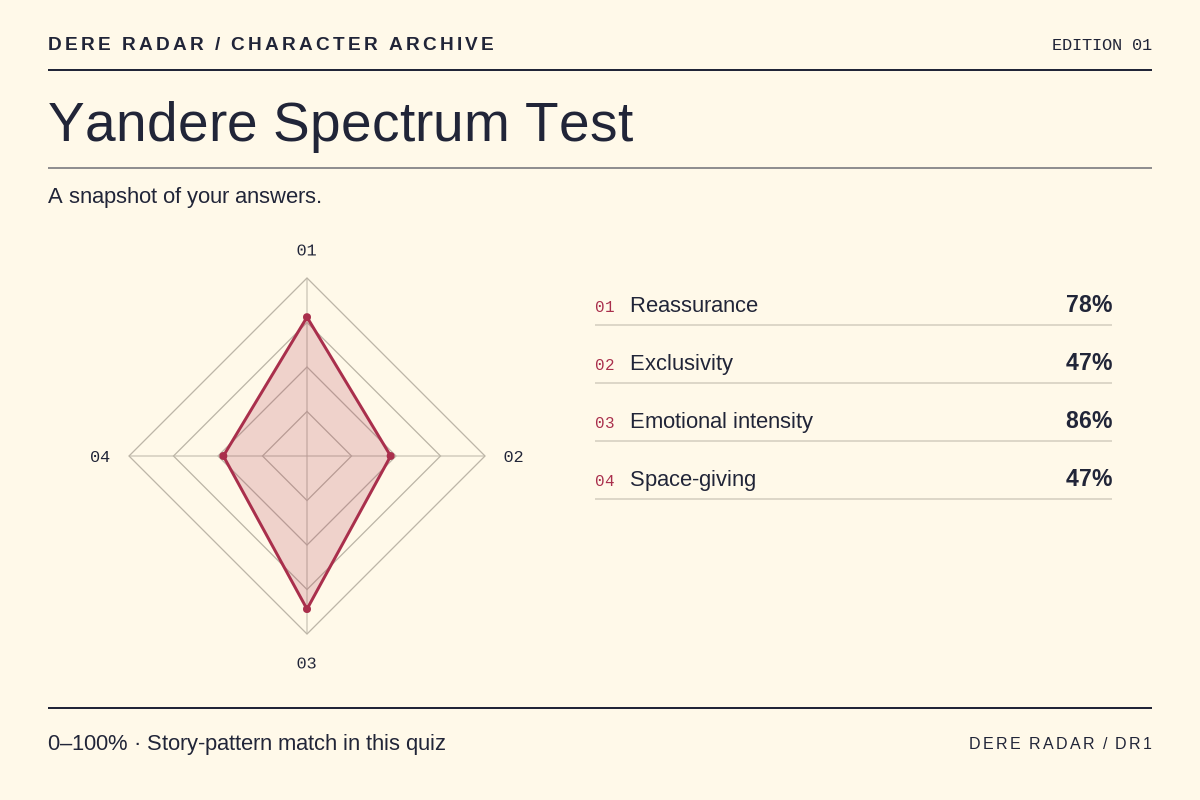
Now make the outing a group thing. Our lead would still love to hear “I'm so glad you came.” In the sample answers, there's strong agreement with the idea that a small sign of closeness helps someone relax around their friend's other friends. A whispered comment about the truly terrible festival band would do it. For these two, complaining about the trumpet solo is practically a love language.
Down at 47% apiece, Exclusivity and Space-giving give this story room to go a few ways. Here's a small change you can try. Let the friend ask for an hour to wander through the stalls alone. Give the lead one honest line about what they'd hoped to do together, then let the friend go. Stay with the lead long enough to see what they do with the hour. That choice will tell you more about them than any number could.
Questions about the yandere test
What can a yandere test tell me about my favorite character?
It gives you four ways to unpack a scene people might file under “wow, they're attached.” Try the mysterious transfer student from a friend's point of view. You see them save a seat every day. Now take their part. Do they want a promise about tomorrow, a minute alone together, or simply the pleasure of seeing a familiar face come through the door?
Where's my overall yandere percentage?
Your card gives each of the four facets its own percentage. Try reading the highest number aloud with its label attached. “High Emotional intensity” tells you something you could actually put on screen. Fold the four into a single number and you'd lose the difference between feeling a reunion in your knees and wanting Tuesdays to stay just for two.
Could missing someone this much go along with high Space-giving?
Absolutely. Imagine the character who counts the days until their roommate comes back from tour. They also know the roommate loves a quiet hour after a show. They can miss them like crazy through a whole encore and still enjoy hearing the story when the roommate feels like calling. The audience gets to witness both parts.
Would wanting one night together make Exclusivity or Reassurance go up?
Listen to what you'd like to hear in reply. “Of course we're still close” might settle everything, even if eight people show up for dinner. Or you might feel perfectly sure of the friendship and still miss the recipe disasters you only attempt when it's the two of you. Particular words and particular rituals can mean different things.
Should I worry about a real person because of a result?
A quiz about fictional scenes can't tell you whether somebody's safe. Pay attention to what actually happens between you. If you ask for an evening alone, you get to have it. Pressuring you for passwords, threatening you, or tracking where you go crosses a boundary whatever cute nickname somebody gives the behavior.
How do I compare two characters from the same show?
Pick the same turning point for both of them, perhaps the last train ride before one moves away. Finish the first run and copy the result link or download the card. Choose Start over, confirm Clear run, then play the other side of the goodbye. You'll have two readings of one afternoon and two very different reasons for staring out the window.
For the rest of the cast, try the twelve-archetype dere test. You can also follow a score from the first answer to the final radar or see exactly what goes into a shared card link.